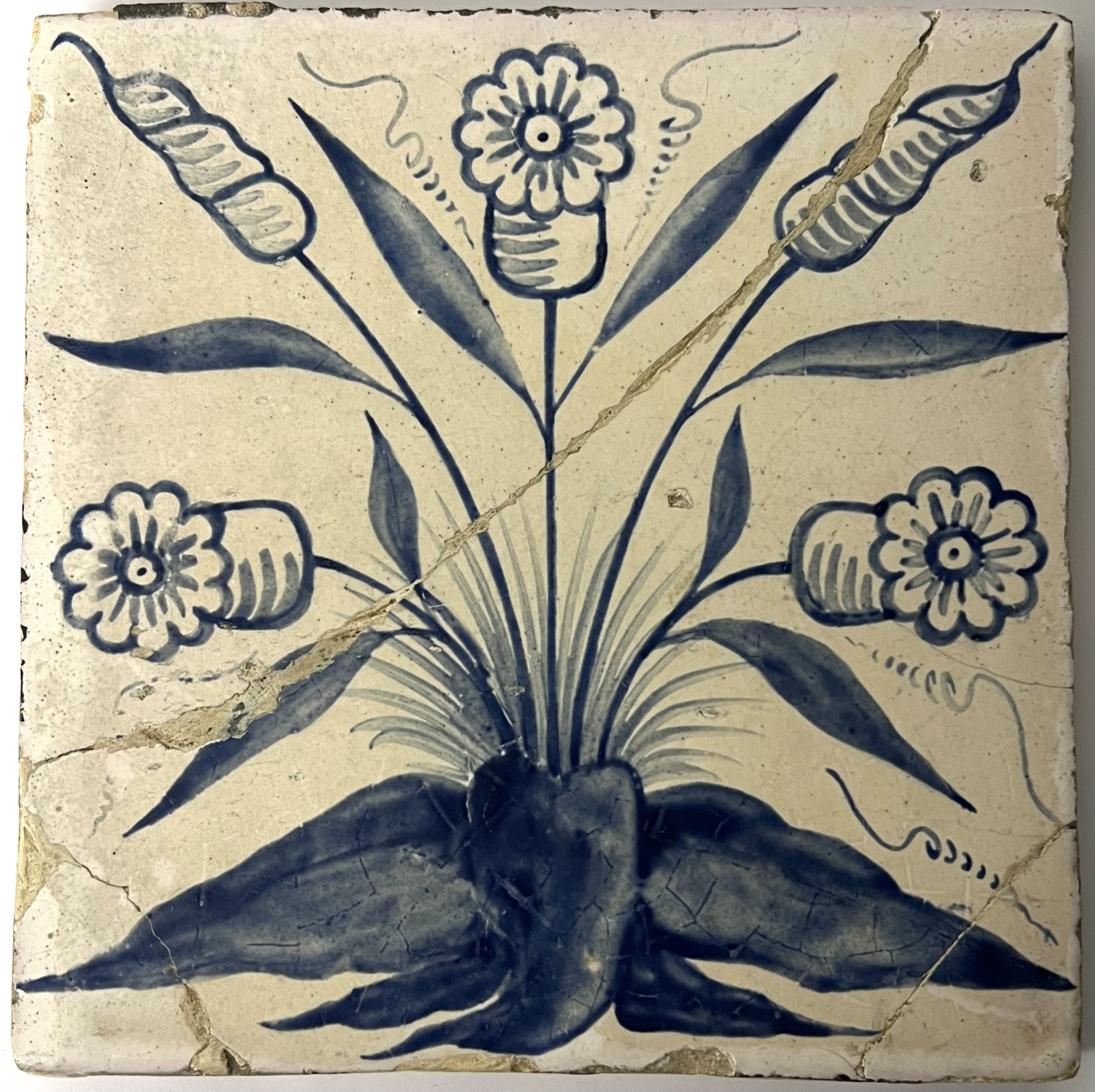
‘Peterhouse Clump’ tile, designed by William Morris, c.1868–73. Hand-painted in blue overglaze on a 5-inch tile, depicting a clump of three daisies with foliage. The name ‘Peterhouse Clump’ derives from the earliest recorded use of the design at Peterhouse, Cambridge, where the architect G. G. Scott Jr commissioned 6-inch versions in blue and yellow for a tiled fireplace in the Fellows’ Combination Room. This monochrome example formed part of a decorative scheme at Garboldisham Manor, Norfolk (1873), also commissioned by Scott. The design belongs to Morris’s early ‘floral clump’ group, which includes patterns such as Daisy, Columbine and Primrose, and relates closely to his earliest wallpaper and textile designs. It is also comparable to stained-glass quarry patterns used in some of the firm’s earliest windows, including those surrounding King René’s Honeymoon, made for Birket Foster’s house, The Hill, Witley, Surrey, in 1863.