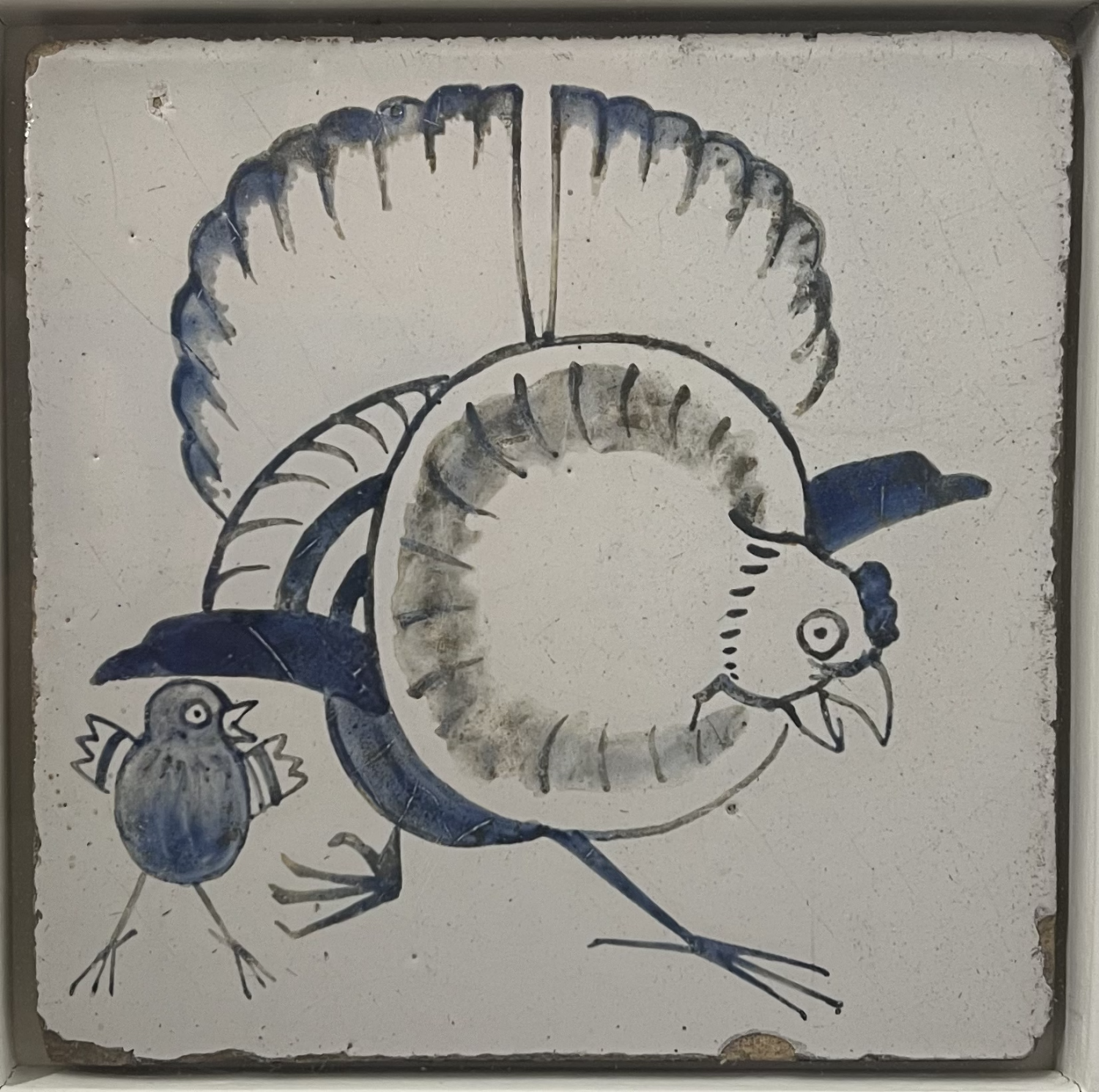
Tile painted in blue on a tin glaze featuring a stylized hen with a chick, is part of a series of hand-painted bird tiles attributed to Philip Webb, a key designer associated with the Arts and Crafts movement and Morris, Marshall, Faulkner & Co. Dating from the early 1860s, this design reflects the firm’s commitment to traditional craftsmanship and medieval-inspired decorative arts. This tile was formerly set within a fireplace in a house in Cambridge. It is one of a set of six decorated with birds.
The hen, depicted in a dynamic pose with an arched back and outstretched legs, appears to be guarding or interacting with the small chick beside it. The expressive brushstrokes and use of cobalt blue on a white ground are characteristic of the period’s revivalist approach to ceramics. This design is part of a documented set of bird tiles that includes roosters, ducks, geese, herons, and magpies, some of which were used in fireplaces, architectural decoration, and stained-glass panels.
Tiles of this type were produced for decorative use in domestic interiors, often appearing in homes designed by William Morris and his circle, such as Red House and Standen.